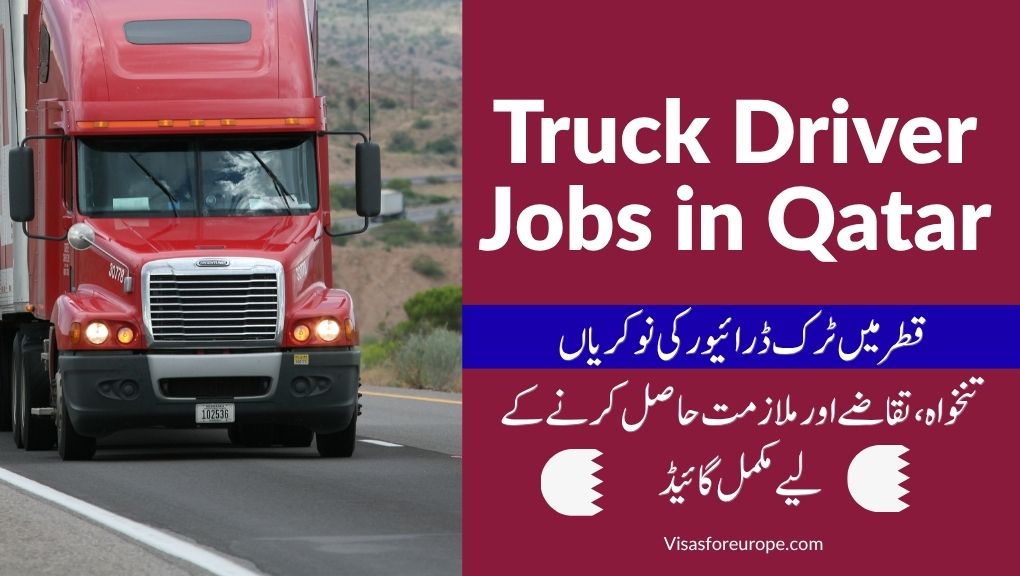
Qatar is one of the wealthiest countries in the world per person, and almost everything that keeps it running, from construction materials to fuel, food, and retail stock, moves on wheels. That makes truck driver jobs in Qatar a steady source of employment for skilled drivers from South Asia, Southeast Asia, Africa, and beyond.
If you are thinking about driving a truck in the Gulf, you probably have practical questions. How much will you earn? Which license do you need? Who pays for the visa and the flight? And how do you avoid the fake agents who target job seekers?
This guide answers those questions in plain language. It covers the types of trucking jobs available, the paperwork involved, realistic pay expectations, daily working conditions, and a step-by-step plan for applying safely.
Why Truck Driver Jobs in Qatar Are in Demand
Qatar’s economy depends on moving goods quickly and reliably. Several sectors keep demand for drivers high:
- Construction and infrastructure: Roads, housing, commercial towers, and public works need constant deliveries of sand, aggregate, cement, steel, and pipes.
- Oil and gas: Qatar is a major LNG exporter, and expansion work around Ras Laffan and other industrial areas creates ongoing transport needs.
- Ports and warehousing: Hamad Port is the country’s main gateway for container cargo, and warehouses in the Industrial Area and around Doha handle a high volume of freight.
- Retail and food distribution: Supermarkets, restaurants, and hotels depend on refrigerated and dry-goods deliveries.
- Cross-border trade: Trucks carry goods between Qatar and neighboring Gulf countries through the land border with Saudi Arabia.
Because Qatar imports most of what it consumes, the need for dependable drivers rarely disappears.
Types of Truck Driver Jobs in Qatar
“Truck driver” covers several roles, and the pay, hours, and license requirements can differ between them.
1. Heavy Truck and Trailer Driver
These drivers operate prime movers with flatbed, low-bed, or container trailers. The work includes long hauls between the port, warehouses, and industrial sites. It usually requires the most experience and the highest license category.
2. Tipper and Dump Truck Driver
Common in construction, these drivers carry soil, sand, gravel, and demolition waste. Shifts are often long, and the work is physically tough, but openings are plentiful.
3. Water Tanker and Fuel Tanker Driver
Tanker work involves transporting water, diesel, or other liquids. Fuel and chemical tankers may require extra safety training and certification.
4. Refrigerated (Reefer) Truck Driver
Reefer drivers deliver temperature-sensitive goods such as dairy, meat, and produce. Punctuality and careful handling matter a great deal here.
5. Light and Medium Truck Driver
Pickups, small box trucks, and medium lorries are used for local deliveries and company logistics. These roles are a good entry point for drivers with less heavy-vehicle experience.
6. Crane, Concrete Mixer, and Specialized Vehicle Operators
Some employers hire for specialized vehicles. These positions often pay more but require specific training and proven experience.
Eligibility and Requirements
Requirements vary by employer and role, but most companies look for the following.
Core requirements:
- A valid driving license with relevant heavy-vehicle experience
- Prior experience, commonly two or more years for heavy trucks
- Good physical fitness and eyesight
- Basic communication skills in English, Arabic, or Hindi/Urdu for instructions on site
- A clean driving record
- A valid passport with enough remaining validity
- A medical fitness certificate, which is mandatory for the work visa process
Helpful extras:
- Experience driving in hot, desert conditions
- Knowledge of GPS and fleet tracking systems
- Defensive driving or safety training certificates
- Prior Gulf experience
Many employers will test candidates through a practical driving test at a recruitment center or after arrival.
Understanding the Qatar Driving License Rules
This is where many applicants get confused, so it is worth being careful.
Driving in Qatar requires a license issued or recognized by the Ministry of Interior (MOI). Foreign licenses are generally not enough on their own for long-term employment. Depending on your nationality and the employer’s setup, you may need to convert your license or take a local driving test after arrival. Heavy vehicles fall under separate license categories from private cars, and each category has its own conditions and testing.
Rules, fees, and procedures change from time to time, and they may differ by nationality. Before you travel, ask your employer in writing who will handle the license process and who bears the cost. Then confirm the current requirements through the MOI’s official channels.
Salary Expectations: How Much Do Truck Drivers Earn in Qatar?
Pay depends on the vehicle type, your experience, and the employer. As a rough guide, many truck drivers earn somewhere in the range of QAR 1,500 to QAR 3,500 per month, and specialized or highly experienced drivers can earn more. Treat these figures as approximate, because actual offers vary by company and over time.
The Legal Minimum Wage
Qatar introduced a non-discriminatory minimum wage that applies to all workers regardless of nationality. It is QAR 1,000 basic, plus allowances of QAR 300 for food and QAR 500 for accommodation if the employer does not provide food or housing. Your offer should never fall below these legal floors.
What Affects Your Pay
- Vehicle type: Trailer and tanker drivers generally earn more than light-truck drivers.
- Experience: Years of proven heavy-vehicle driving strengthen your bargaining position.
- Overtime: Many drivers add to their base pay through overtime, which should be paid according to the labor law and your contract.
- Employer type: Large logistics firms often offer more structured packages than small contractors.
Benefits to Look For
- Free accommodation (usually shared labor housing)
- Meals or a food allowance
- Transportation to and from work
- Medical insurance or access to health care
- Annual air ticket
- End-of-service gratuity after completing the required period
Always compare the total package, not just the basic salary.
Working Conditions and Daily Life
Hours and Heat
The standard working week under Qatari law is up to 48 hours, with overtime compensated separately. Summer in Qatar is extremely hot, and the government restricts outdoor work during the hottest hours of the day in the summer months. Check with your employer how this applies to drivers, as rules for different job types can vary.
Accommodation and Lifestyle
Most employers provide shared accommodation, often in labor housing areas. Living costs are manageable when food and lodging are covered, which is why many drivers are able to save and send money home each month.
Safety
Qatar takes road safety seriously. Speeding, overloading, and mobile phone use while driving carry fines and can put your job at risk. Good drivers follow load limits, rest rules, and vehicle inspection routines.
Your Rights as a Worker in Qatar
Over the past few years, Qatar has reformed its labor system. Key changes include the removal of the old requirement to get your employer’s permission to change jobs, and the removal of exit-permit requirements for most workers. Wage protection systems also require employers to pay salaries through banks.
A few points every driver should know:
- You should not pay recruitment fees. Under Qatari law, the employer is responsible for recruitment costs. If an agent asks you for large payments, treat it as a red flag.
- Your passport belongs to you. Employers should not hold it without your consent.
- You are entitled to a written contract that matches the job you were promised.
- Complaints can be raised through the Ministry of Labour’s official channels.
Laws and enforcement practices evolve, so check the latest information from official sources or your embassy before signing anything.
Top Employers and Sectors That Hire Truck Drivers
Opportunities exist across different kinds of organizations:
- Logistics and freight companies: These firms hire heavily for trailers, container trucks, and delivery fleets.
- Construction and contracting companies: They hire tipper, mixer, and low-bed drivers for project sites.
- Oil, gas, and energy contractors: These employers need tanker and heavy-haul drivers, often with stricter safety requirements.
- Food and retail distributors: They look for reefer and medium-truck drivers.
- Government-linked and large corporate fleets: These sometimes offer more structured contracts and benefits.
Rather than relying on a single name, build a shortlist by researching companies’ official websites and verified job listings, and apply directly wherever possible.
Step-by-Step: How to Apply for Truck Driver Jobs in Qatar
Step 1: Prepare Your Documents
Gather your passport, driving license, experience certificates, a recent photograph, and educational or training certificates. Prepare a short, clean CV that highlights your vehicle types, years of experience, and any safety training.
Step 2: Search Verified Sources
Look for jobs through:
- Official company career pages
- Reputable job portals
- Licensed recruitment agencies registered in your home country
- Official government recruitment channels
Step 3: Apply and Attend Interviews
Employers often interview by phone or video, and some hold trade tests in your home country. Be ready to explain your route experience, vehicle handling, and safety knowledge.
Step 4: Review the Offer Carefully
Before accepting, confirm in writing:
- Salary and allowances
- Contract length
- Working hours and overtime pay
- Accommodation and transport
- Who pays for the visa, medical tests, and air ticket
Step 5: Complete Medical and Visa Processing
Qatar runs Qatar Visa Centres (QVCs) in several labor-sending countries. These handle fingerprinting, medical checks, and contract verification before you travel, which makes the process more transparent. Your employer sponsors your work visa and residence permit.
Step 6: Travel and Complete Local Formalities
After arrival, you will complete your residence permit, health card, and any license conversion or testing required for the job.
How to Spot and Avoid Job Scams
Fake offers are common wherever demand for overseas work is high. Watch out for these warning signs:
- Demands for large upfront fees, especially for “guaranteed” visas
- Offers that arrive via WhatsApp or social media without any verifiable company details
- Unrealistic salaries far above the market range
- No written contract or a contract that changes after you pay
- Pressure to decide quickly or to pay in cash
- Visa types that do not match work, such as visit visas offered as “job visas”
Protect yourself by verifying the employer’s name, confirming the agency’s license with your country’s regulator, and keeping copies of every document and receipt.
Tips to Increase Your Chances of Getting Hired
- Highlight specific experience. Mention vehicle types, load capacities, and routes rather than just “truck driver.”
- Get safety training. A defensive driving or first-aid certificate sets you apart.
- Keep your documents ready. Delays in paperwork cost candidates offers.
- Improve basic English or Arabic. Understanding instructions and safety signs matters on the job.
- Stay physically fit. Medical screening is mandatory, and long shifts are demanding.
- Be honest about experience. Trade tests quickly expose exaggerated claims.
Career Growth for Truck Drivers in Qatar
Driving does not have to be a dead-end job. With experience and a good record, drivers can move into:
- Senior driver or fleet lead roles
- Dispatcher or logistics coordinator positions
- Driver trainer or road-safety instructor roles
- Specialized heavy-equipment operation, which often pays more
Employers value drivers who are reliable, punctual, and careful with vehicles, so a strong track record opens doors.
Conclusion
Truck driver jobs in Qatar offer real opportunities for experienced drivers who prepare properly. Demand is driven by construction, energy, ports, and retail, and the legal minimum wage, written contracts, and QVC processing give workers more protection than in the past. The best outcomes go to people who verify their employer, understand the license rules, read the contract carefully, and never pay illegal recruitment fees.
Take your time, ask questions, and rely on official sources. A well-chosen job can mean stable income and a solid career in one of the Gulf’s busiest logistics markets.
Frequently Asked Questions (FAQ)
1. Is it easy to get a truck driver job in Qatar?
Demand is steady, but employers prefer candidates with proven heavy-vehicle experience. Good documents, a clean record, and a successful trade test improve your chances considerably.
2. What is the average salary of a truck driver in Qatar?
Many drivers earn roughly QAR 1,500 to QAR 3,500 per month, depending on vehicle type, experience, and employer. Overtime and benefits can change the total. These figures are approximate and vary by company.
3. Do I need a Qatari driving license before applying?
Not always. Many employers hire first and then help with license conversion or testing after you arrive. Confirm the process and costs in writing before you accept the offer.
4. Who pays for the visa and air ticket?
Under Qatari law, employers are responsible for recruitment costs. You should not be charged illegal recruitment fees. Always check your contract and confirm what is covered.
5. Can I change jobs in Qatar after joining?
Recent labor reforms allow workers to change employers without the old permission requirement, subject to legal notice rules and contract terms. Check the latest regulations for details.
6. Is accommodation provided for truck drivers?
Most employers provide shared accommodation or pay a housing allowance, in line with minimum-wage rules. Confirm this in your contract.
7. How can I tell if a job offer is genuine?
Verify the company and the recruiting agency through official sources, insist on a written contract, avoid paying upfront fees, and use Qatar Visa Centre processing where it is available in your country.
8. Is the work hard in summer?
Qatar’s summers are very hot. There are rules limiting outdoor work during peak heat hours, and good employers provide water, rest, and safety measures. Ask how the employer manages this before you join.
Disclaimer: Salaries, visa procedures, and labor regulations change over time. Confirm all details with official Qatari authorities, your embassy, or a licensed recruitment agency before making decisions.