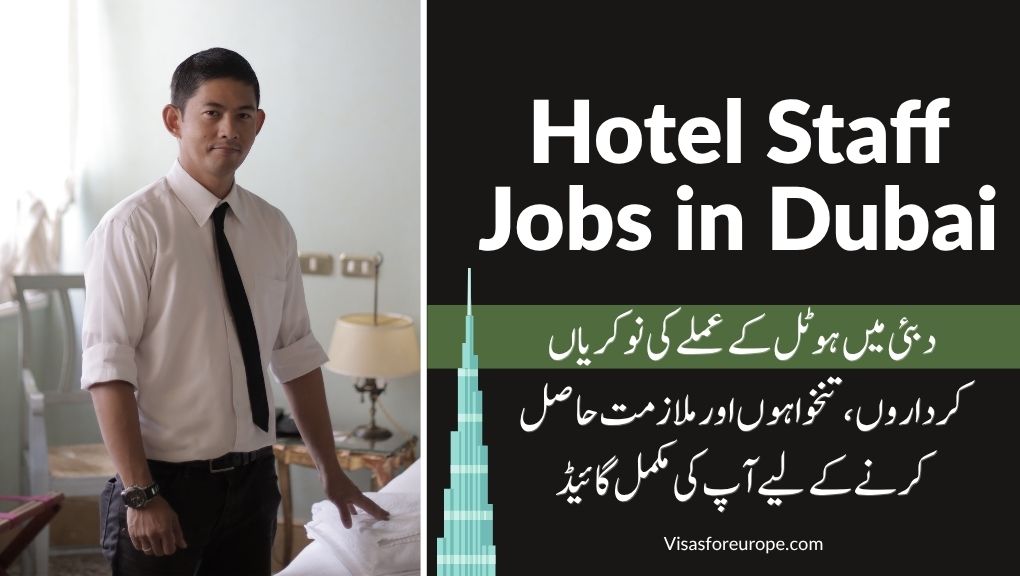
Dubai welcomes millions of visitors every year, and every one of them needs a bed, a meal, and someone to make them feel looked after. That is why hotel staff jobs in Dubai remain some of the most accessible and rewarding opportunities in the Gulf region. The city has luxury towers, beach resorts, business hotels, and budget-friendly chains, and all of them run on skilled people.
Whether you are a fresher with a hospitality diploma, an experienced waiter looking for better pay, or someone changing careers, Dubai’s hotel industry has a place for different skill levels. But the process can feel confusing. What roles exist? How much do they pay? Do employers provide accommodation and visas? And how do you avoid fake job offers?
This guide answers those questions in plain language so you can plan your move with confidence.
Why Choose a Hotel Career in Dubai?
Tax-Free Income
The UAE does not charge personal income tax on salaries, so what you earn is what you take home. For many workers, this makes a decent salary go much further, especially when the employer also provides housing and meals.
Employer-Provided Benefits
Many hotels offer a package that goes beyond the base salary. Depending on the employer and role, this can include:
- Staff accommodation (usually shared)
- Meals on duty in the staff canteen
- Transport to and from work
- Medical insurance
- Annual air ticket to your home country
- Uniforms and laundry
Career Growth and Global Exposure
Dubai hotels attract guests and colleagues from all over the world. Working there builds communication skills, cultural awareness, and a CV that international employers respect. Many people start as a room attendant or restaurant server and grow into supervisors, department heads, or even general managers over the years.
A Constant Demand for Staff
Tourism, business events, exhibitions, and year-round travel keep hotels busy. Peak season, roughly October to April, often increases hiring as properties prepare for higher occupancy.
Types of Hotel Staff Jobs in Dubai
Hotels are like small cities, with many departments working together. Here are the main areas where you can find work.
Front Office and Guest Services
This is the face of the hotel. Roles include:
- Front desk agent / receptionist: handles check-in, check-out, and guest queries
- Concierge: arranges tours, taxis, bookings, and local recommendations
- Bellboy / bell attendant: assists with luggage and directions
- Guest relations executive: manages VIP guests and complaints
- Reservations agent: handles bookings by phone and email
Best for: people with strong communication skills and a polished appearance. Fluency in English is essential, and Arabic, Hindi, Russian, or Chinese is a bonus.
Housekeeping
Housekeeping keeps rooms and public areas spotless. It is one of the largest departments and a common entry point for new workers.
- Room attendant / housekeeper
- Public area cleaner
- Laundry attendant
- Housekeeping supervisor
- Executive housekeeper (senior role)
Best for: hardworking people who take pride in detail. Formal qualifications are often not required, though basic English and a willingness to learn are.
Food and Beverage (F&B) Service
Restaurants, cafés, bars, banquets, and room service all need service staff.
- Waiter / waitress
- Barista
- Bartender
- Host / hostess
- Banquet server
- In-room dining attendant
- Restaurant supervisor and manager
Best for: friendly, energetic people who work well under pressure. Many F&B roles also earn tips or service charge shares.
Kitchen and Culinary
Hotels run multiple kitchens, from fine dining to staff canteens.
- Commis chef (entry level)
- Demi chef de partie
- Chef de partie
- Sous chef
- Kitchen steward (dishwashing and cleaning)
- Pastry and bakery assistants
Best for: people with culinary training or practical kitchen experience. Hygiene knowledge and food safety certification help your application.
Spa, Recreation, and Leisure
Resorts and luxury hotels employ:
- Spa therapists
- Lifeguards
- Gym attendants and trainers
- Kids’ club staff
- Pool and beach attendants
Maintenance, Security, and Support
Behind the scenes, hotels need:
- Technicians, electricians, and plumbers
- Security officers
- Drivers
- Store keepers and purchasing assistants
Sales, Marketing, and Administration
For those with degrees or office experience, roles include sales executive, marketing coordinator, HR assistant, accountant, and revenue analyst.
Hotel Job Salary in Dubai: What to Expect
Pay varies by hotel category (budget, 4-star, 5-star), your experience, nationality of the employer’s hiring policy, and the benefits included. The figures below are rough monthly ranges in UAE dirhams (AED) and should be treated as general estimates only. Always confirm the exact amount in your offer letter.
| Role | Approximate Monthly Basic (AED) |
|---|---|
| Room attendant / housekeeper | 1,000 – 1,800 |
| Kitchen steward | 1,000 – 1,600 |
| Bellboy / doorman | 1,200 – 2,000 |
| Waiter / waitress | 1,200 – 2,500 |
| Barista | 1,500 – 2,800 |
| Front desk agent | 2,500 – 4,500 |
| Commis chef | 1,500 – 2,500 |
| Chef de partie | 3,000 – 5,000 |
| Supervisor (various departments) | 3,000 – 6,000 |
| Department manager | 8,000 and above |
Understanding the Total Package
Look at more than the headline number. A role with a lower base salary can still be strong value if the hotel provides free accommodation, meals, and transport, because these remove some of your biggest monthly costs. Service charge or tips in F&B can also add noticeably to your income, though they vary by hotel policy and season.
Skills and Qualifications Employers Look For
Core Skills for Almost Every Role
- Good spoken English. This is the working language in most hotels.
- Customer service attitude. Patience, politeness, and a genuine willingness to help.
- Teamwork. Hotels operate in shifts and depend on coordination.
- Grooming and professionalism. Neat appearance and punctuality matter.
- Flexibility. Shift work, weekends, and holidays are normal.
Helpful Extras
- Basic computer skills (property management systems, email, Excel)
- Knowledge of Arabic or additional languages
- A hotel management diploma or degree
- Food hygiene or HACCP certification for kitchen and F&B roles
- Previous experience in a hotel, restaurant, or resort
Can Freshers Apply?
Yes. Many hotels hire freshers for entry-level positions like room attendant, kitchen steward, waiter, and trainee roles. Hospitality internships and management trainee programs also exist. If you have no experience, highlight your attitude, language skills, and willingness to learn.
How to Get a Hotel Job in Dubai: Step by Step
Step 1: Decide Your Target Role
Be honest about your strengths. If you are outgoing and neat, front desk or F&B may suit you. If you prefer working quietly and methodically, housekeeping or kitchen work could be a better fit.
Step 2: Prepare a Professional CV
Keep it to one or two pages, and include:
- A clear photo-free or standard formal format (check the employer’s preference)
- Contact details, including a professional email address
- Work experience with specific duties
- Education and certifications
- Languages and computer skills
Tailor it for each application, using keywords from the job post such as “guest service,” “check-in,” “banquet service,” or “inventory.”
Step 3: Search in the Right Places
Reliable ways to find genuine openings include:
- Official hotel career pages (international chains list vacancies directly)
- Established job portals that operate in the UAE
- LinkedIn, where you can follow hotel groups and connect with recruiters
- Hospitality recruitment agencies that are licensed and transparent
- Hotel job fairs and walk-in interviews (these are often advertised on hotel pages and local job boards)
Step 4: Apply and Prepare for the Interview
Interviews are often held by video call for overseas candidates. Prepare by:
- Practicing common questions: “Why do you want to work in hospitality?” and “How would you handle an upset guest?”
- Learning about the hotel and its brand
- Dressing professionally even for online interviews
- Testing your internet and camera beforehand
Step 5: Review the Offer Carefully
A genuine offer letter should clearly state your job title, salary, allowances, working hours, accommodation, contract length, and benefits. Read it fully and ask questions before accepting.
Step 6: Visa and Travel Process
For most hotel jobs, the employer arranges your employment visa, medical test, and Emirates ID. The exact steps and timing depend on the company and current UAE regulations, so confirm details directly with your employer.
Visa and Legal Basics You Should Know
Employment Visa
Legitimate employers sponsor your work visa. Your employment should be registered under UAE labour rules, and you should receive a proper contract.
Job Exploration Options
The UAE has introduced visit and job-exploration style visas that let some candidates enter the country to search for work. Eligibility and requirements can change, so check current conditions on official UAE government portals before applying. Do not rely on third-party claims alone.
Your Rights as an Employee
UAE labour law generally covers matters such as written contracts, wages, working hours, rest days, annual leave, and end-of-service benefits. Keep copies of your contract and salary records. If a dispute arises, official channels such as the Ministry of Human Resources and Emiratisation (MOHRE) handle labour complaints.
Rules and fees change, so always verify the latest requirements with official sources.
How to Avoid Job Scams
Unfortunately, fake recruiters target people searching for Dubai hotel jobs. Protect yourself by watching for these red flags:
- Asking for payment for a job offer, visa, or “guaranteed placement.” In the UAE, recruitment costs are generally the employer’s responsibility under the law.
- Offers without any interview or any verification of your skills
- Unrealistically high salaries for entry-level roles
- Communication only through WhatsApp or free email accounts, with no company website or verifiable address
- Pressure to pay urgently or “the position will go to someone else”
- A visa offered on a visit or tourist permit without a clear employment arrangement
Safety Checklist
- Verify the company on its official website and cross-check the contact details.
- Confirm the vacancy on the hotel’s own career page or by calling the hotel directly.
- Check whether the recruitment agency holds a valid licence in your country and in the UAE.
- Never send money to an individual’s personal account.
- Keep written proof of every agreement.
Daily Life as a Hotel Employee in Dubai
Working Hours and Shifts
Hotel work typically runs in shifts, covering early mornings, afternoons, evenings, and sometimes nights. You may work weekends and public holidays, with days off given on a rotating basis. Expect busy peak seasons, and plan your rest accordingly.
Accommodation
Staff housing is usually shared, with rooms for two to six people depending on the property and role. Facilities and locations differ by employer. If you receive a housing allowance instead, rent can be a major monthly cost, so compare areas carefully.
Cost of Living Tips
- Use public transport such as the metro and buses where possible.
- Eat staff meals when provided.
- Avoid unnecessary spending on expensive tourist areas.
- Keep an emergency fund and save a fixed amount each month.
Cultural Awareness
Dubai is multicultural and welcoming, but it also has its own laws and customs. Respect local dress norms in public, follow rules about alcohol and public behavior, and be mindful during Ramadan, when working patterns and public etiquette change.
Tips to Stand Out and Grow Your Hotel Career
- Improve your English and add a second language. Even basic Arabic phrases impress guests and managers.
- Take short courses. Customer service, food safety, first aid, and hospitality management certificates all strengthen your profile.
- Be reliable. Punctuality and a positive attitude get noticed faster than many skills.
- Ask for cross-training. Learning a second department, such as moving from housekeeping to front office, opens promotion paths.
- Build relationships. Supervisors and colleagues are the people who recommend you for better roles.
- Track guest feedback. Positive reviews that mention your name are valuable proof of performance.
- Set a five-year plan. Decide whether you want to become a supervisor, specialize as a chef, or move into management.
Common Mistakes Applicants Make
- Sending the same generic CV to every hotel
- Ignoring the details in the job description
- Accepting the first offer without reading the contract
- Paying agents or “processing fees” that a legitimate employer should cover
- Underestimating the physical demands of shift work
- Expecting tips and overtime to be guaranteed
Conclusion
Hotel staff jobs in Dubai offer a practical route to steady income, international experience, and long-term career growth. From housekeeping and F&B to the front desk and the kitchen, there is a role for many skill levels. Success comes from three things: preparing a strong CV, applying through verified channels, and checking every offer carefully before you commit.
Start by choosing your target role, polishing your profile, and applying only to genuine employers. Stay cautious about anyone asking for money, and verify visa and labour rules through official UAE sources. With patience and the right approach, a rewarding hospitality career in Dubai is well within reach.
Frequently Asked Questions (FAQ)
1. Are there hotel jobs in Dubai for freshers?
Yes. Entry-level roles such as room attendant, kitchen steward, waiter, and trainee positions are often open to freshers. Hotel management graduates may also find internship or management trainee programs.
2. Do Dubai hotels provide accommodation and visas?
Many do, especially for operational roles. Employers commonly sponsor the visa and may offer shared staff housing, meals, and transport. Always confirm these details in writing in your offer letter.
3. What is the salary of a hotel worker in Dubai?
It depends on the role and hotel. Entry-level positions often start around AED 1,000 to 2,000 per month plus benefits, while skilled and supervisory roles pay considerably more. Treat these as approximate figures.
4. Is English enough, or do I need to know Arabic?
English is sufficient for most hotel roles. Arabic or other languages can give you an advantage, particularly in guest-facing positions.
5. Do I have to pay an agent to get a hotel job in Dubai?
Generally, no. Legitimate employers bear recruitment and visa costs under UAE rules. Be very cautious of anyone demanding money for a guaranteed job.
6. When is the best time to apply?
Hiring often increases before the winter peak season, roughly from October to April, but vacancies appear throughout the year.
7. Can I grow my career from an entry-level hotel job?
Absolutely. Many hotel managers started in junior roles. Consistent performance, additional training, and cross-department experience can lead to supervisor and management positions.
Disclaimer: Salary figures, visa rules, and labour regulations change over time. Verify current information with official UAE government sources and your prospective employer before making decisions.