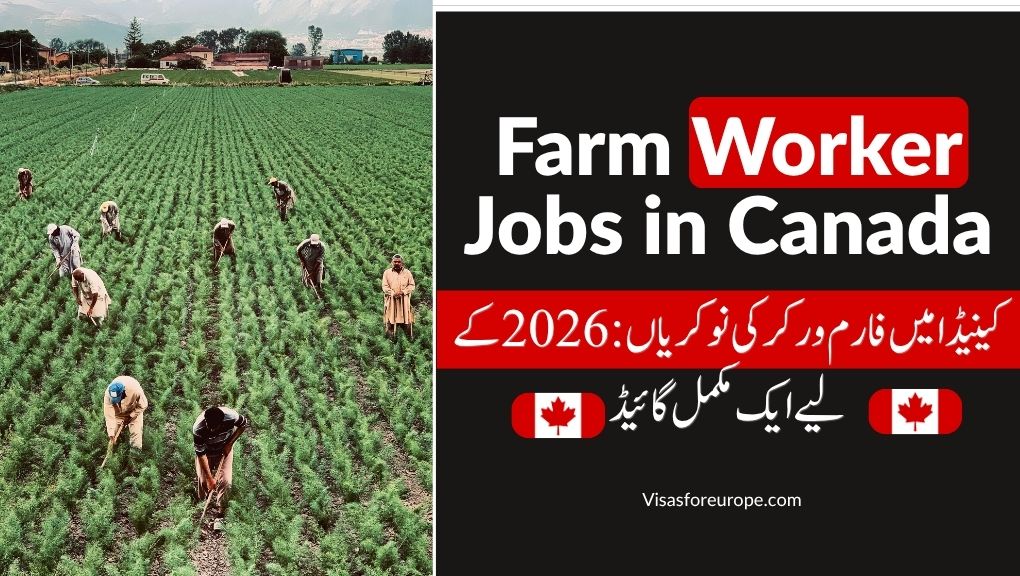
Every spring, as the snow melts across Ontario, British Columbia, Quebec, and the Prairies, Canadian farms begin to fill with people. Greenhouses need pickers, orchards need pruners, and dairy barns need steady hands. Behind the fresh vegetables, fruit, eggs, and milk on Canadian shelves is a large workforce, and a significant part of it comes from other countries.
If you’re considering farm worker jobs in Canada, you’re probably asking practical questions. Is it legal? How much does it pay? Who can apply? Is it only seasonal, or can it lead to something longer-term? And how do you avoid the scams that target hopeful applicants?
This guide answers those questions in plain language. It covers the main programs, the types of jobs, typical pay, your rights as a worker, and a safe step-by-step process for applying. Immigration rules change often, so treat this article as a starting point and confirm the latest details on official Government of Canada websites before you act.
Why Does Canada Need Farm Workers?
Canadian agriculture faces a persistent labour gap. Many farm jobs are physically demanding, seasonal, and located in rural areas, so employers often struggle to find enough local workers. When Canadian citizens and permanent residents aren’t available, farms can turn to the Temporary Foreign Worker Program (TFWP).
The program exists to help employers fill temporary labour needs when qualified Canadians and permanent residents can’t be found. For you as a job seeker, this means opportunities are real and recurring. But the process is employer-driven and regulated, which is also why shortcuts and “guaranteed visa” offers should raise red flags.
Main Pathways to Farm Jobs in Canada
There are two main routes for foreign nationals to work legally on Canadian farms. Which one applies to you depends mostly on your country of citizenship.
1. Seasonal Agricultural Worker Program (SAWP)
The SAWP is the older and more structured of the two. It runs on bilateral agreements between Canada and participating governments. Employers can hire workers for a maximum of 8 months, between January 1 and December 15, provided they can offer at least 240 hours of work within 6 weeks or less. canada
Key points to know:
- Who is eligible: Workers must be citizens of Mexico or participating Caribbean countries. Citizens of other countries, including India, Pakistan, and the Philippines, cannot enter through SAWP. canada
- How selection works: Your home government selects and manages applicants. You don’t apply directly to a Canadian farm.
- Long history: The program has operated since 1966 and is one of the longest-running temporary foreign worker programs in the world. welcomeaide
2. The Agricultural Stream
If you’re not from a SAWP country, this is the route that matters most. The Agricultural Stream has no source-country restrictions and allows employers to name workers individually. That makes it the main option for applicants from South Asia, Africa, Latin America, and elsewhere. canxglobal
- Eligible work: Production must fall under specific commodity sectors, and the activity must be related to on-farm primary agriculture. canada
- Contract length: Employers submitting an LMIA for a low-wage position may request up to 2 years of employment. Positions classified as high-wage can be longer. canada
- Employer requirement: The employer must first obtain a Labour Market Impact Assessment (LMIA), a government document confirming that hiring a foreign worker won’t harm the local labour market.
Quick Comparison
| Feature | SAWP | Agricultural Stream |
|---|---|---|
| Eligible countries | Mexico and select Caribbean nations | Any country |
| Maximum stay | Up to 8 months per year | Up to 2 years (low-wage positions) |
| Hiring method | Government-managed placement | Employer recruits and names the worker |
| LMIA required | Yes | Yes |
Types of Farm Worker Jobs Available
“Farm work” covers a surprisingly wide range of roles. Here are some of the most common categories.
Crop and Field Work
- Fruit and vegetable pickers: apples, cherries, berries, tomatoes, and more
- Planters and weeders: seasonal field preparation and maintenance
- Harvesters: grain, corn, and root crops, often with machinery
Greenhouse and Nursery Work
- Greenhouse labourers: pruning, tending, and harvesting tomatoes, cucumbers, peppers, and flowers
- Nursery workers: potting, watering, and packing plants and trees
Livestock and Animal Care
- Dairy farm workers: milking, feeding, and cleaning
- Poultry and egg farm workers: egg collection, bird care, barn maintenance
- Hog and cattle farm workers: feeding, herd health checks, general upkeep
Equipment and Skilled Roles
- Tractor and farm machinery operators
- Supervisors and farm foremen, typically for those with prior experience
Entry-level roles usually require no formal degree, which is a big reason farm work attracts so many applicants. That said, prior farm experience, physical fitness, and a reliable work ethic make you a much stronger candidate.
How Much Do Farm Workers Earn in Canada?
Pay depends on the province, the type of work, and whether you’re paid hourly or by piece rate (for example, per bin of fruit picked).
The core rule is straightforward. Employers must provide temporary foreign workers with the same wages and benefits as those provided to Canadian and permanent resident workers in the same occupation. infotetquebec
As a rough guide, many farm roles pay between CAD 16 and CAD 22 per hour, with experienced, skilled, or supervisory positions earning more. Provincial minimum wages differ and are revised regularly, so check the current rate for the province where you’ll be working.
Overtime and Hours
Rules on overtime vary by province, and agriculture is sometimes treated differently from other industries. Peak harvest weeks can mean long days, which boosts income but also demands stamina. Read your contract carefully for expected hours.
Housing and Living Costs
Housing is a major cost advantage for many farm workers. Employers must provide free, adequate housing to SAWP workers and most Agricultural Stream workers. Confirm in writing what your contract says about housing, transportation, and any deductions, since terms can vary by stream and employer. canxglobal
Eligibility: What Do You Need to Qualify?
Exact requirements depend on the program, but most applicants should expect the following:
- A valid passport with enough remaining validity
- A formal job offer from a Canadian employer with an approved LMIA (Agricultural Stream) or placement through your government (SAWP)
- A work permit issued by Immigration, Refugees and Citizenship Canada (IRCC)
- A medical exam, where required
- A police clearance certificate
- Basic physical fitness for demanding outdoor or barn work
- Working-level English or French, which is helpful even where it isn’t formally tested
Documents to Prepare Early
- Passport and photographs
- Educational and work-experience records
- Proof of any prior farm experience
- Police certificate and medical documents
- Funds and travel documents, as advised by the visa office
Starting this paperwork early can save weeks once an offer arrives.
Step-by-Step: How to Get a Farm Job in Canada
Here is a realistic roadmap, especially for applicants applying through the Agricultural Stream.
Step 1: Confirm Which Program Fits You
If you’re a citizen of Mexico or a participating Caribbean country, contact your national labour ministry about SAWP. If you’re from elsewhere, the Agricultural Stream is your likely path.
Step 2: Search for Genuine Employers
Use trusted sources such as Canada’s official Job Bank, provincial agricultural associations, and verified employer websites. Genuine employers will be able to explain the LMIA process and provide a written contract.
Step 3: Get a Written Job Offer and Contract
The offer should state your job title, wages, hours, duration, housing arrangements, and who pays for transportation. Never rely on verbal promises.
Step 4: Employer Obtains the LMIA
The employer applies to Employment and Social Development Canada (ESDC). Note that SAWP and the Agricultural Stream are both exempt from the $1,000 LMIA application fee that applies to standard streams. canxglobal
Step 5: Apply for Your Work Permit
Once the LMIA is approved, you apply to IRCC with your job offer, LMIA, and supporting documents. Processing times vary by country, so check the current estimates on the official website.
Step 6: Prepare for Arrival
Arrange your travel, collect your documents, and learn about your rights. Dress for the climate, since Canadian weather can swing quickly.
Recent Policy Changes to Be Aware Of
Canada has been tightening and adjusting its temporary foreign worker rules, and farm workers are affected in different ways than other sectors. Highlights worth knowing:
- Caps on low-wage hiring apply to many industries, but agriculture has its own dedicated stream. The sector has its own dedicated stream, SAWP, but may also hire through the low-wage stream. producer
- Rural flexibilities: From April 1, 2026, eligible rural employers may raise the share of low-wage temporary foreign workers in their workforce from 10% to 15%. canadim
- Housing and protections: Recent updates have emphasized stricter housing standards, easier worker mobility within the agricultural sector, and stronger protections for workplace safety and rights. nsfa-fane
- Permanent residence targets: Provincial nominee targets have increased, which matters because many provinces use nomination programs to retain agricultural workers.
Policies shift quickly, so always verify against canada.ca before making financial commitments.
From Farm Work to Permanent Residence: Is It Possible?
Many applicants ask whether farm work can lead to staying in Canada long-term. The honest answer: it can, but it isn’t automatic.
Possible pathways include:
- Provincial Nominee Programs (PNPs): Some provinces nominate agricultural workers who have proven themselves with local employers.
- Agri-food specific pilots: Canada has run immigration pilots aimed at agriculture and food processing. Check IRCC’s website for whether a pilot is currently open and what it requires.
- Employer-supported pathways: Strong work history, language skills, and a supportive employer improve your chances.
If permanent residence is your goal, document your work history carefully, improve your English or French, and research the provincial programs where you’ll be working. SAWP is designed as temporary seasonal work, so it generally has fewer settlement pathways than longer Agricultural Stream contracts.
Your Rights as a Farm Worker in Canada
Knowing your rights protects you from exploitation. In Canada, temporary foreign workers are entitled to:
- Fair, agreed wages, paid on time, matching what the contract says
- Safe working conditions, including proper training and equipment
- Adequate housing where the employer provides it
- Protection from abuse and discrimination
- Access to provincial health coverage or insurance, depending on province and stay duration
- The right to keep your own passport and documents. An employer cannot lawfully take them.
If something goes wrong, you can contact provincial labour standards offices, migrant worker support organizations, or the federal government’s tip line for temporary foreign worker abuse.
How to Avoid Job Scams
Unfortunately, fake agents prey on hopeful workers. Watch for these warning signs:
- Upfront “guaranteed visa” fees. Legitimate employers cannot charge you recruitment fees for a job.
- No written contract, or a contract that changes after you pay
- Pressure to pay immediately through untraceable methods
- Job offers with no LMIA where one is required
- Unrealistically high pay for entry-level work
Safe habits: verify the employer’s business name, check the job on official portals, ask for the LMIA details, and consult a licensed immigration professional (an RCIC or lawyer) if you’re unsure.
Tips to Succeed as a Farm Worker in Canada
- Be physically ready. The work involves long hours on your feet, bending, lifting, and weather exposure.
- Learn basic safety rules. Machinery, chemicals, and animals all carry risks.
- Save intelligently. Free housing helps, but budget for remittances, clothing, and emergencies.
- Build relationships. Good performance often leads to repeat contracts and references.
- Keep records. Track your hours, pay slips, and contract copies.
Conclusion
Farm worker jobs in Canada can be a genuine opportunity: steady seasonal income, in many cases free housing, and for some workers a stepping stone toward longer-term residence. The key is choosing the correct pathway, SAWP if you’re from an eligible country or the Agricultural Stream if you’re not, and working only with legitimate employers.
Prepare your documents early, insist on a written contract, understand your rights, and never pay anyone for a “guaranteed” job. Done carefully, farm work in Canada can be rewarding for your finances and your future.
Frequently Asked Questions (FAQ)
1. Can anyone apply for farm worker jobs in Canada?
Not exactly. SAWP is limited to citizens of Mexico and participating Caribbean countries, while the Agricultural Stream is open to workers from any country if an employer secures an LMIA and offers you a job.
2. Do I need an LMIA to work on a Canadian farm?
For both SAWP and the Agricultural Stream, the employer typically needs an approved LMIA before you can get your work permit.
3. How long can I work on a farm in Canada?
Under SAWP, up to 8 months between January 1 and December 15. Under the Agricultural Stream, low-wage positions can last up to 2 years.
4. Do farm employers provide housing?
In most cases, yes. Employers are generally required to provide adequate housing at no cost for SAWP and most Agricultural Stream workers, but check your contract.
5. Is knowledge of English or French necessary?
Many entry-level roles don’t require formal test scores, but basic communication helps with safety, daily tasks, and future immigration options.
6. Can my family come with me?
SAWP workers generally cannot bring family. Agricultural Stream workers may have limited options depending on their permit type. Confirm with IRCC.
7. Can farm work lead to permanent residency?
Possibly, through provincial nominee programs or agri-food pilots, but it is not guaranteed. Requirements change, so check current eligibility.
8. How do I know if a job offer is real?
Verify the employer, request the LMIA information, insist on a written contract, and never pay recruitment fees. When in doubt, consult a licensed immigration consultant or lawyer.