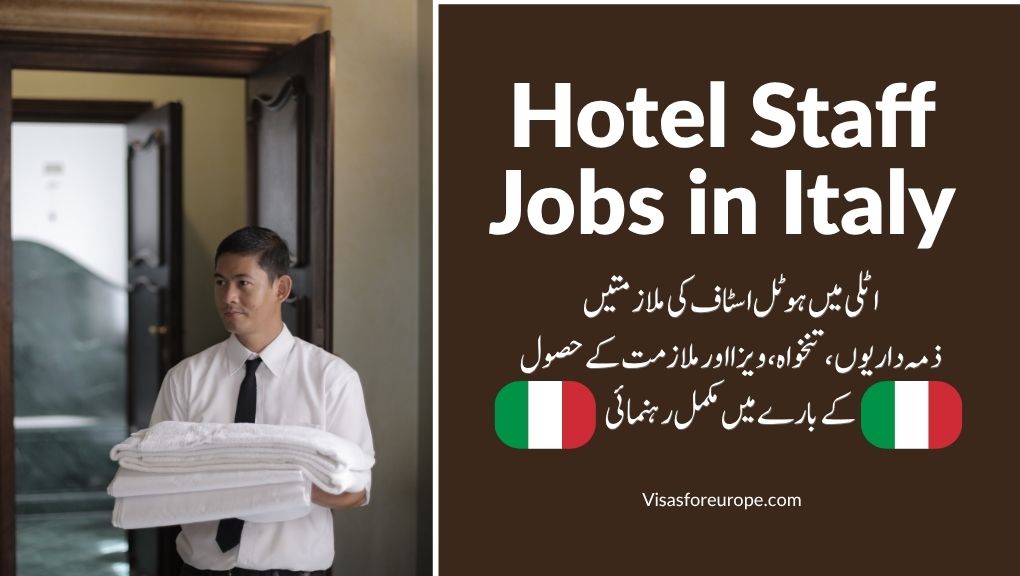
Italy welcomes tens of millions of tourists every year. They come for Rome’s ancient ruins, Venice’s canals, the Amalfi Coast’s cliffside villages, and the ski slopes of the Dolomites. Every one of those visitors needs a place to sleep, a breakfast to eat, and someone to greet them at the door.
That is why hotel staff jobs in Italy are among the most consistent job opportunities in the country’s economy. Hotels, resorts, boutique guesthouses, and agriturismi (farm stays) hire thousands of workers every season, from front desk agents and housekeepers to waiters, cooks, and porters.
If you are thinking about working in Italian hospitality, this guide covers the most common roles, what they pay, the best places to look, how the visa process works for non-EU citizens, and how to avoid the scams that target hopeful applicants.
Why Choose a Hotel Career in Italy?
Hospitality is not just a way to earn money in Italy. For many people it is a gateway to a new life. Here is why it appeals to so many job seekers:
- Constant demand: Tourism is a major part of the Italian economy, and employers regularly struggle to fill positions, especially in peak season.
- Low entry barriers: Many roles, such as housekeeping, kitchen assistance, and breakfast service, do not require a degree.
- Accommodation and meals: Many seasonal employers provide staff housing or meals, or both, which significantly reduces your living costs.
- Cultural immersion: You learn Italian on the job, build international friendships, and experience the country far beyond what a tourist sees.
- Career growth: Starting as a dishwasher or room attendant can lead to supervisory and management roles within a few seasons.
Most Common Hotel Staff Jobs in Italy
Front Office and Guest Services
Hotel receptionist (receptionist / addetto al ricevimento): Receptionists handle check-in and check-out, reservations, guest questions, and payments. English is essential, and a second language such as German, French, Spanish, or Russian is a major advantage. Basic Italian is usually expected.
Concierge: Found mainly in four- and five-star hotels, concierges arrange restaurant bookings, tours, transport, and special requests. This role typically requires experience and strong local knowledge.
Night auditor / night porter: These staff manage the hotel overnight, handle late arrivals, and prepare daily financial reports. It suits people who prefer quiet night shifts.
Bellhop / porter (facchino): Porters carry luggage, assist guests, and keep the lobby running smoothly. It is physically active and often a good entry-level position.
Housekeeping and Maintenance
Room attendant (cameriere ai piani): Room attendants clean guest rooms, change linens, restock supplies, and maintain hygiene standards. This is one of the most common entry points into hotel work.
Laundry staff: Large hotels and resorts run in-house laundries and need people to wash, press, and fold linens and uniforms.
Maintenance technician (manutentore): Technicians fix plumbing, electrical issues, air conditioning, and general repairs. Trade skills are valued.
Food and Beverage
Waiter or waitress (cameriere di sala): Waiters serve breakfast, lunch, and dinner in hotel restaurants and at events.
Bartender (barman): Bartenders prepare cocktails, coffee, and drinks. Experience with Italian classics like spritz, negroni, and espresso-based drinks helps.
Breakfast attendant: Many hotels hire staff only for the busy breakfast service, which suits people who want a morning shift.
Commis chef and kitchen assistant (aiuto cuoco): Kitchen staff prep ingredients, assist head chefs, and keep the kitchen clean. Culinary training helps for chef roles, but kitchen assistant positions are often open to beginners.
Dishwasher (lavapiatti): A basic but important role, and often the easiest way into a hotel kitchen.
Wellness and Leisure
Spa attendant or therapist: Luxury hotels and resorts need trained massage therapists, beauticians, and spa assistants.
Pool and beach attendant: Seaside resorts hire staff for sunbed service, towel management, and guest assistance during summer.
How Much Do Hotel Workers Earn in Italy?
Pay varies by role, region, hotel category, and experience. Most hotel workers in Italy fall under a national collective labor agreement for tourism and hospitality (the CCNL Turismo), which sets minimum wages, working hours, overtime, and holiday entitlements.
As a general guide, entry-level hotel staff often earn somewhere in the range of €1,100 to €1,500 net per month. Experienced receptionists, bartenders, and supervisors can earn more, and head chefs or managers at luxury properties earn significantly more.
Several factors influence your pay:
- Location: Milan, Rome, and luxury destinations like Capri or Lake Como tend to pay more, but the cost of living is also higher.
- Hotel star rating: Four- and five-star properties usually pay better and offer more tips.
- Language skills: Fluency in multiple languages can raise your value, especially at the front desk.
- Housing and meals: If your employer provides accommodation or food, your real take-home value is higher than the salary suggests.
- Overtime and tips: Peak season often means long hours, though overtime should be paid according to the contract.
These figures are approximate and change over time, so always confirm the exact salary, hours, and benefits in your written contract before accepting an offer.
Best Places in Italy for Hotel Work
Major Cities
Rome, Milan, Florence, and Venice offer year-round hotel jobs because tourism and business travel never stop. City jobs tend to be more stable than purely seasonal ones, and they offer more chances for career advancement.
Coastal and Island Destinations
The Amalfi Coast, Sorrento, Capri, Sicily, Sardinia, Puglia, and the Adriatic Riviera (Rimini and surrounding areas) hire heavily from spring to autumn. The season usually runs from around April to October, which makes these regions ideal for seasonal workers.
Lakes and Mountains
Lake Como, Lake Garda, and Lake Maggiore attract international travelers in summer. The Dolomites, South Tyrol, and the Alps hire for the winter ski season, roughly December to April, and again for summer hiking tourism. These regions often need staff who speak German as well as Italian and English.
Tip: Combine Seasons
Many workers follow the sun and the snow: a summer season at the coast followed by a winter season in the mountains. This keeps you employed for most of the year.
Skills and Qualities Employers Look For
You do not need to be perfect, but hotels consistently value the following:
- Language ability: English is the baseline. Italian, even at a basic level, makes you far more hireable.
- Customer service mindset: Patience, a warm attitude, and the ability to stay calm under pressure matter more than any certificate.
- Reliability: Hotels run 24/7. Showing up on time and keeping commitments earns trust fast.
- Teamwork: Hotel operations depend on housekeeping, the kitchen, and the front desk working together.
- Physical stamina: Many roles involve long hours on your feet.
- Hygiene and food safety knowledge: Kitchen and restaurant roles may require basic HACCP training, which employers sometimes provide.
- Computer skills: Front desk staff should be comfortable with reservation and property management software.
Can Foreigners Work in Hotels in Italy?
Yes, but the rules depend on your citizenship.
EU and EEA Citizens
If you are a citizen of an EU or EEA country, you have the right to live and work in Italy without a visa. You can apply directly to hotels and start working after registering your residence as required.
Non-EU Citizens
If you are from outside the EU, you generally need a valid work authorization. For hotel work, the usual route is a seasonal or subordinate work visa under Italy’s Decreto Flussi, the government’s annual or multi-year quota system for foreign workers.
Here is how the process typically works:
- An Italian employer applies for you. The employer submits a request for a work permit (nulla osta) through the official Italian immigration channels during designated application windows, often called click days.
- The authorities review the request. If the quota has not been exhausted and all conditions are met, the permit is issued.
- You apply for a visa. With the approved permit, you apply at the Italian embassy or consulate in your home country.
- You travel to Italy and sign your contract. Within a short period after arrival, you complete the formalities, including the residence permit application (permesso di soggiorno).
Quotas, deadlines, eligible nationalities, and procedures change regularly. Before making any plans, check the current rules on the official website of the Italian Ministry of Interior or the Italian embassy in your country.
The Golden Rule
A genuine Italian employer applies for your work permit. You should never pay someone to “guarantee” a visa. Which brings us to the next section.
How to Avoid Hotel Job Scams
Because demand for jobs in Europe is so high, scammers target hopeful workers with fake offers. Protect yourself by watching for these red flags:
- Anyone asking for large upfront fees for a “guaranteed” visa or job placement
- Offers with no interview or no direct contact with the actual hotel
- Contracts that are vague about salary, hours, location, or duration
- Communication only through messaging apps with no official company email or website
- Pressure to pay quickly or to send money to a personal account
- Promises of unrealistically high pay for unskilled work
Before you trust any offer, verify the hotel’s existence and contact details independently, ask for a written contract, and confirm the permit process through official government channels. Legitimate employers do not sell visas.
Step-by-Step: How to Get a Hotel Job in Italy
Step 1: Decide Your Role and Season
Choose the type of work that fits your skills and the period you want to work. Summer and winter seasons have different hiring cycles.
Step 2: Prepare a Strong CV
Keep it to one or two pages, in English and ideally also in Italian. Highlight customer service experience, languages, and any hotel, restaurant, or tourism work. Include a professional photo only if the employer expects one, since practices vary.
Step 3: Learn Basic Italian
Even simple phrases such as greetings, numbers, and common hotel vocabulary show effort and improve your chances. Free apps and online courses can get you to a useful level within a few months.
Step 4: Search the Right Places
- Italian and international job boards that list hospitality roles
- Official hotel and hotel group career pages
- Recruitment agencies specialized in hospitality
- EURES, the European job mobility portal, for EU citizens and some mobility programs
- LinkedIn and professional hospitality networks
Step 5: Apply Early
Seasonal hiring begins months in advance. For a summer season starting in April or May, begin applying in the winter. For ski resorts, start in late summer or early autumn.
Step 6: Ace the Interview
Most interviews for foreign applicants happen over video call. Be punctual, dress neatly, speak clearly, and show enthusiasm. Employers want to see that you are reliable, adaptable, and genuinely interested in guest service.
Step 7: Get Everything in Writing
Confirm salary, working hours, days off, accommodation arrangements, meal provisions, and contract length before you commit.
Step 8: Handle Paperwork Properly
Follow the official visa or registration process, keep copies of all documents, and make sure you receive a proper contract and pay slips once you start.
Life as a Hotel Worker in Italy: What to Expect
Long and irregular hours: Peak season can mean split shifts, weekend work, and holiday duty. Hotels are busiest when everyone else is on vacation.
Staff housing: Seasonal accommodation is often shared and simple. It is a great way to save money and meet colleagues, but do not expect luxury.
A language learning boost: Daily interaction with colleagues and guests helps you pick up Italian faster than any classroom.
A warm, food-loving culture: Many hotels feed their staff well, and sharing meals is a big part of Italian work culture.
Rest days matter: Italian labor rules provide for weekly rest and paid leave. Know your rights under your contract, and do not hesitate to ask HR or a labor union (sindacato) if something seems wrong.
Tips to Stand Out From Other Applicants
- Show flexibility. Willingness to work evenings, weekends, and a full season impresses employers.
- Get relevant short certifications, such as food hygiene, first aid, or a basic hospitality course.
- Highlight multiple languages, especially those common among Italy’s visitors, such as German, French, Spanish, and Russian.
- Be responsive. Replying quickly to messages and emails signals professionalism.
- Ask for references from previous hospitality employers and keep them ready.
- Be open to smaller towns. Less famous destinations often have less competition and just as much work.
Conclusion
Hotel staff jobs in Italy offer a realistic path to earning a living, learning a language, and experiencing one of the world’s most beloved countries from the inside. Whether you start as a room attendant on the Adriatic coast, a receptionist in Rome, or a waiter in an Alpine ski lodge, the hospitality industry rewards hard work, reliability, and a friendly attitude.
Success comes down to preparation: choose your role, polish your CV, learn some Italian, apply early, and stay alert to scams. Most importantly, follow the official visa process and never pay anyone for a promised permit. With patience and the right approach, your first Italian hotel season could be the start of a rewarding international career.
Frequently Asked Questions (FAQ)
1. Do I need to speak Italian to get a hotel job in Italy?
Not always, especially in international hotels and tourist hotspots where English is widely used. However, basic Italian improves your chances significantly and helps you communicate with colleagues, especially in kitchens and housekeeping.
2. Can non-EU citizens get hotel jobs in Italy?
Yes, but they generally need a work permit and visa arranged through an Italian employer under the Decreto Flussi quota system. Always confirm the current rules with official Italian government sources or your nearest Italian embassy.
3. Do Italian hotels provide accommodation for staff?
Many seasonal employers do, especially in resort areas, islands, and mountain regions. Some deduct a small amount from wages, while others include it free. Always confirm this in writing.
4. What is the best time to apply for seasonal hotel jobs?
For summer positions, apply between winter and early spring. For winter ski season jobs, apply between late summer and autumn. Applying early gives you the best chance.
5. Are hotel jobs in Italy well paid?
Entry-level pay is modest, but combined with free housing or meals, many workers save a good amount. Pay rises with experience, language skills, and the hotel’s star rating.
6. Can I find a year-round hotel job?
Yes. Hotels in big cities such as Rome, Milan, Florence, and Venice operate all year and often offer longer contracts than seasonal resorts.
7. How can I tell if a hotel job offer is real?
Verify the hotel independently, insist on a written contract, communicate through official channels, and never pay anyone for a guaranteed visa or job.
Note: Visa rules, quotas, and salary levels change often. Treat the figures here as general guidance and check official sources before making decisions.