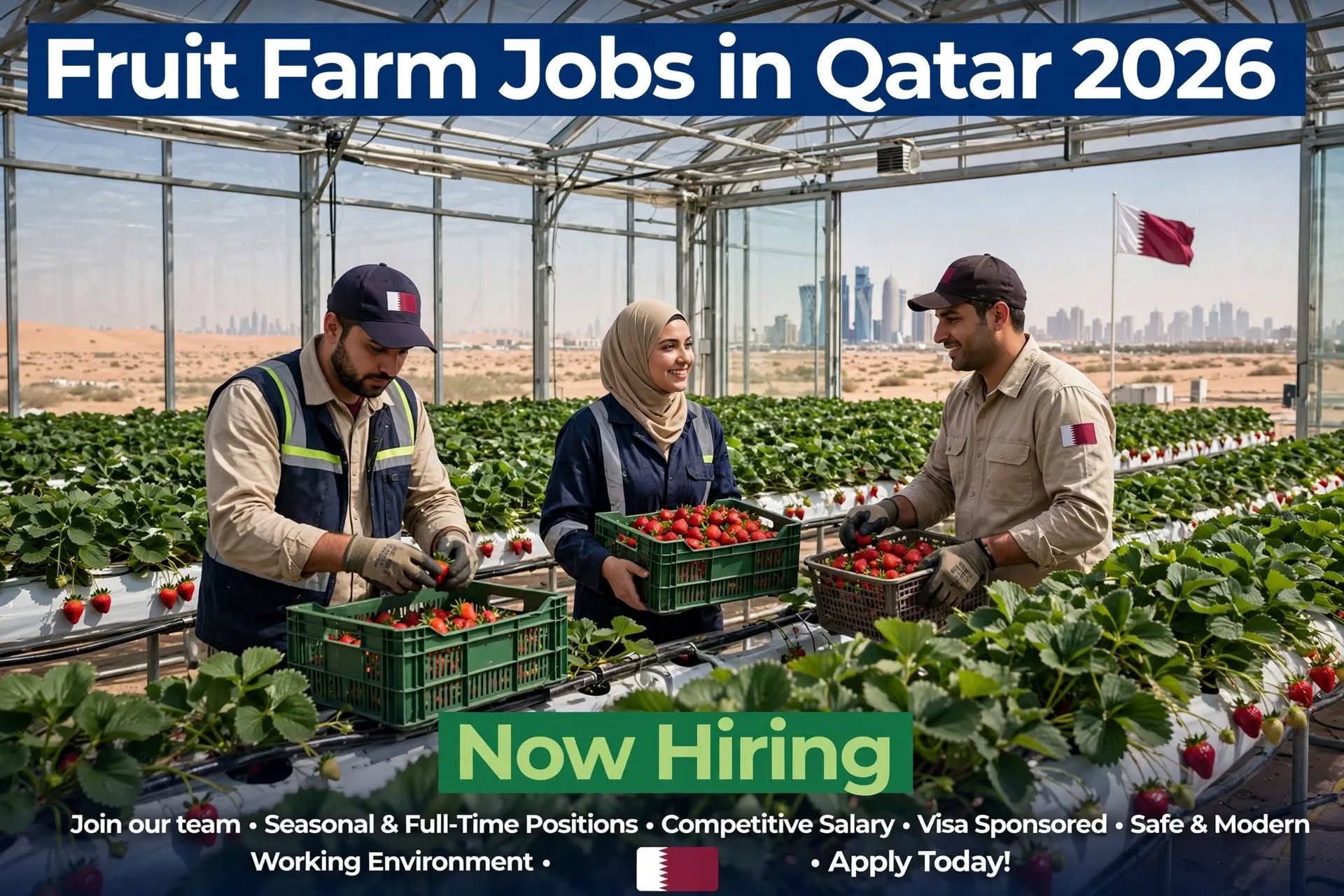
When most people think of Qatar, they picture skyscrapers, gas fields, and stadiums. Farming rarely comes to mind. Yet agriculture is one of the quieter growth stories in the Gulf. Qatar imports most of its food, and since the 2017 regional blockade the country has invested heavily in local production under its National Food Security Strategy. Greenhouses, hydroponic units, and date and fruit orchards have expanded as a result. That growth has created steady demand for farm labour.
If you are searching for jobs at a fruit farm in Qatar, this guide covers what you need to know: the roles available, what the work involves, typical pay and benefits, the visa process, and how to avoid recruitment scams. It also covers what daily life looks like in a hot, dry climate so you know what to expect before you apply.
Why Qatar Has Demand for Fruit Farm Workers
Qatar’s climate is harsh. Summers are extremely hot and rainfall is minimal. Even so, farms in the north and west of the country grow a surprising range of produce using drip irrigation, shade nets, and climate-controlled greenhouses.
Government push for local production
Qatar’s food security plans aim to raise domestic output of fresh produce and reduce dependence on imports. Farms receive support through technology, subsidies, and marketing channels. More farms mean more hands needed for planting, maintenance, harvesting, and packing.
Raed Also: Factory Worker Jobs in Qatar
Where the farms are
Most agricultural activity is concentrated in areas such as Al Khor, Al Shamal, Umm Salal, Al Wakra, and Al Dhakhira. Workers are often housed in labour accommodation on or near the farm, and transport is usually arranged by the employer.
Which fruits are grown?
Date palms are the best-known crop, and dates are a cultural staple. Farms also grow melons, watermelons, citrus, figs, pomegranates, strawberries, and other fruit, with greenhouses extending the season for some crops. The exact crop depends on the farm.
Types of Jobs Available at a Fruit Farm in Qatar
“Fruit farm worker” covers several different roles. Knowing the difference helps you target the right job.
1. Fruit picker / harvester
This is the most common entry-level role. You pick ripe fruit by hand, place it in crates, and move it to collection points. Speed, care with the fruit, and stamina matter most.
2. General farm labourer
Labourers handle a mix of tasks: clearing land, planting, weeding, spreading compost, moving crates, and keeping the farm tidy. This role suits people with little or no experience.
3. Orchard and date palm worker
Palm and orchard work includes pruning, pollinating, thinning fruit, and tying bunches. Date palm work can involve climbing or working from lifts, so it takes more skill and often pays slightly better.
4. Greenhouse worker
Greenhouse jobs involve training vines, pruning, pollinating, harvesting, and monitoring plant health. The work is more controlled and usually less exposed to the sun, but greenhouses can be humid and warm.
5. Irrigation technician
Technicians install, maintain, and repair drip lines, pumps, and timers. Basic plumbing or electrical knowledge is a big advantage.
6. Packing and grading staff
After harvest, fruit is sorted, washed, graded, and packed. Packing-house work is typically indoors and suits people who are detail-oriented.
7. Tractor and machinery operators
Operators drive tractors, sprayers, and small loaders. A valid licence and demonstrated experience are generally required.
8. Supervisors and farm managers
Experienced workers can move up to team leader, supervisor, or assistant farm manager roles. These positions usually require English or Arabic skills, agricultural knowledge, and people management experience.
Typical Duties and Daily Routine
A typical day on a Qatari fruit farm starts early. In hot months, work often begins around sunrise to avoid the worst of the heat.
Common daily tasks include:
- Harvesting ripe fruit at the correct stage of maturity
- Handling crates carefully to avoid bruising
- Pruning, thinning, and training plants
- Checking irrigation lines for leaks and blockages
- Applying fertiliser or pest control under supervision, using protective gear
- Sorting and packing fruit for transport
- Cleaning tools, storage areas, and packing stations
Most farms run six days a week, and hours can be long during peak harvest. Always confirm working hours, rest days, and overtime rules in your written contract before you travel.
Qualifications and Skills Employers Look For
Most fruit farm jobs are entry-level, so formal education is usually not required. Employers care more about attitude, health, and willingness to work hard.
Basic requirements
- Good physical fitness and tolerance for heat
- Age typically between 21 and 45, though this varies by employer
- Ability to follow instructions and work in a team
- A clean medical report, as required for Qatar work visas
- A valid passport with sufficient validity remaining
Skills that help you stand out
- Previous experience in farming, gardening, or harvesting
- Knowledge of irrigation systems or pesticide handling
- A valid driving licence or tractor experience
- Basic English or Arabic, which helps with safety instructions
- Punctuality and a reliable work record
Experienced vs. beginner
Beginners can start as labourers or pickers. If you have specialist skills such as palm pruning, greenhouse management, or machinery operation, you are in a stronger position to negotiate pay and win a better role.
Salary and Benefits: What to Expect
Pay varies by employer, role, and experience, so treat any figure you see online as a rough guide and rely on your written offer.
Minimum wage framework
Qatar introduced a non-discriminatory minimum wage that applies to all workers regardless of nationality or sector. The framework sets a minimum basic wage plus allowances for food and housing when the employer does not provide them directly. Check the current figures with the Ministry of Labour, as they can be updated.
What entry-level workers can usually expect
Entry-level fruit farm workers generally earn at or modestly above the legal minimum. Skilled roles such as machinery operators, irrigation technicians, and supervisors typically earn more.
Common benefits
- Accommodation, usually shared labour housing
- Food, either provided or paid as an allowance
- Transport between accommodation and the farm
- Medical care under Qatar’s health coverage rules
- Annual leave and return ticket according to the contract and labour law
- End-of-service gratuity after the qualifying period of service
Always check whether your salary is paid through the Wage Protection System (WPS), which pays wages through bank transfer and makes late or unpaid wages easier to trace.
Visa and Work Permit Process
Understanding the process protects you from scams and delays.
Step 1: Receive a genuine job offer
A licensed employer or recruitment agency issues a written offer and contract. The contract should clearly state your job title, salary, working hours, accommodation, and contract length.
Step 2: Employer applies for your work visa
In Qatar, your employer applies for the visa and work permit. You do not buy a visa from an agent on the open market.
Step 3: Medical and biometric checks
Many countries have Qatar Visa Centres (QVC) where candidates complete medical tests, fingerprinting, and contract verification before leaving home. This helps make sure the contract you sign matches the one registered with Qatari authorities.
Step 4: Travel and arrival
After approval, you travel to Qatar on a ticket arranged by the employer, complete any remaining formalities, and receive your Qatar ID (QID).
A note on labour reforms
Qatar has reformed its labour system in recent years, including changes that allow workers to change jobs and leave the country without the old exit permit rules in most cases. Rules continue to evolve, so check the current position with official sources.
Living and Working Conditions
Heat and safety
Summers in Qatar are very hot. The government restricts outdoor work during the hottest hours of summer and requires employers to protect workers from heat stress. Farms should provide shade, drinking water, and rest breaks. Ask your employer exactly how they manage this.
Accommodation
Workers typically stay in shared rooms with basic facilities. Standards vary, so ask for details about room size, bathrooms, cooking, and internet access before accepting an offer.
Food and lifestyle
Qatar has a large South Asian, Filipino, and African community, so familiar food is easy to find. Workers often cook together or use farm-provided meals. Mobile data and international calling are affordable, which makes it easier to stay in touch with family.
Days off
Friday is the weekly rest day for most workers, though farm schedules can differ. Check this in your contract.
How to Find Fruit Farm Jobs in Qatar
Reliable sources
- Licensed recruitment agencies registered in your home country
- Official government job portals and the Qatar Visa Centre network
- Company websites of large agricultural and food companies in Qatar
- Reputable job boards that verify employers
- Referrals from friends or relatives already working in Qatar, followed by independent verification
Tips for a strong application
- Prepare a simple CV listing any farming or outdoor work experience.
- Keep your passport, photos, and certificates ready.
- Highlight physical fitness, reliability, and any specialist skills.
- Be honest about your experience. Employers often test skills on arrival.
How to Avoid Recruitment Scams
Fake job offers target people looking for overseas work. Protect yourself with these rules.
- Never pay for the job offer itself. Under Qatari law and international standards, employers should bear recruitment costs. Be very cautious about any agent asking for large fees.
- Verify the employer and agency. Check registration with the labour authority in your home country and with Qatari authorities.
- Get a written contract before you travel, in a language you understand.
- Do not hand over your passport to anyone other than authorised officials. Employers keeping workers’ passports is illegal in Qatar.
- Be suspicious of “guaranteed visa” claims or offers that arrive through unknown social media accounts.
- Make sure the contract you sign matches the one registered through official channels.
If something feels wrong, stop and verify before you pay or travel.
Career Growth in Agriculture
A fruit farm job can be more than a short-term contract.
- Skill-based progression: pickers can become team leaders, and labourers can train as irrigation or machinery specialists.
- Greenhouse and hydroponics experience is increasingly valuable as controlled-environment farming expands in the Gulf.
- Transferable experience: time on a modern farm in Qatar can help you secure better agricultural roles elsewhere in the region.
- Further learning: short courses in pest management, food safety, and farm machinery improve your pay prospects.
Pros and Cons of Working at a Fruit Farm in Qatar
Advantages
- Steady monthly salary under a legal contract
- Accommodation and food support in many cases
- Low entry barriers for beginners
- Tax-free income, since Qatar has no personal income tax
- Growing demand in a developing agricultural sector
Challenges
- Extreme heat, especially from June to September
- Long hours during harvest
- Time away from family
- Basic shared accommodation
- Risk of scams if you do not verify recruiters
Weighing these honestly helps you decide whether the job suits your situation.
Conclusion
Jobs at a fruit farm in Qatar offer a practical entry point to Gulf employment, particularly for people with farming experience or a strong work ethic. Demand is supported by Qatar’s push for food security, and roles range from simple fruit picking to skilled positions in irrigation, greenhouse work, and farm supervision.
The keys to a good outcome are preparation and caution. Understand the role, confirm the pay and conditions in writing, use only legitimate recruitment channels, and never pay for a job offer. Do that, and a fruit farm job in Qatar can be a stable step toward better earnings and new skills.
Frequently Asked Questions (FAQ)
1. Do I need experience to get a fruit farm job in Qatar?
Not always. Many entry-level roles such as picker or general labourer accept beginners. Experience helps for specialised roles like palm pruning, machinery, or irrigation.
2. What is the salary for fruit farm workers in Qatar?
Entry-level pay is generally near the national minimum wage, with higher pay for skilled roles. Confirm the exact figure, allowances, and overtime terms in your written contract.
3. Does the employer provide accommodation and food?
Many farms provide shared accommodation, transport, and either meals or a food allowance. Check your contract to see what is included.
4. Who pays for my visa and flight ticket?
Generally the employer should cover visa and recruitment costs. Be careful with any agent who demands large payments.
5. How hot does it get, and is outdoor work safe?
Summers are very hot. Qatar restricts outdoor work during peak heat hours and requires employers to protect workers. Ask about shade, water, and rest breaks before accepting.
6. Can I change jobs after arriving in Qatar?
Recent labour reforms make job changes easier than before, but conditions can apply. Check the current rules with the Ministry of Labour.
7. How can I check whether a job offer is genuine?
Verify the employer and agency through official channels, insist on a written contract, and confirm registration through a Qatar Visa Centre where available.
8. Can I bring my family?
Family visas usually depend on salary and job category. Most entry-level farm workers live in Qatar without family, but this depends on your employer and income level.
Disclaimer: Laws, wage rules, and visa procedures in Qatar change from time to time. Always check current information with official Qatari government sources before applying or travelling.
1 thought on “Jobs at a Fruit Farm in Qatar”