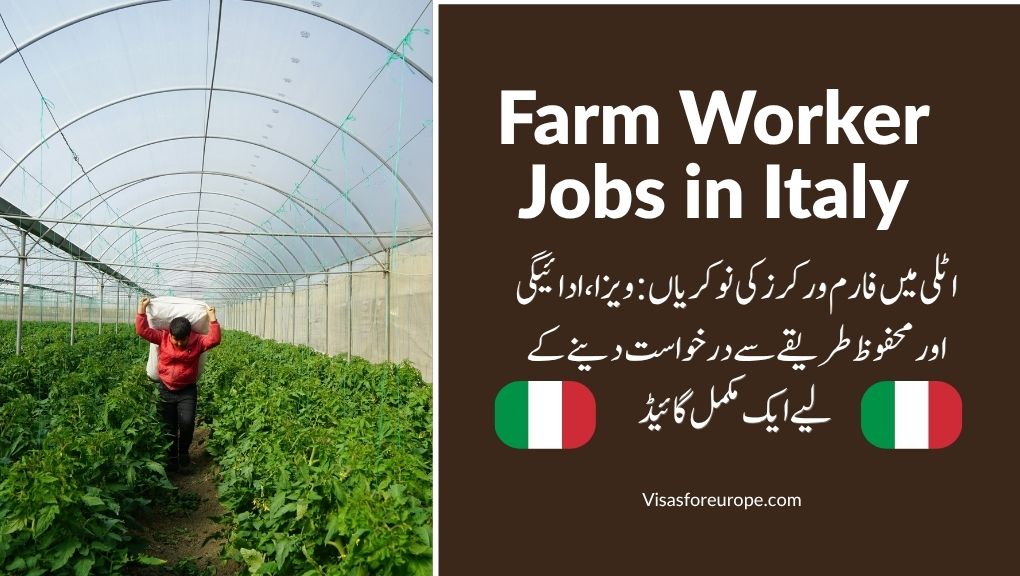
Italy is famous for its pasta, olive oil, wine, and tomatoes, but few people think about the hands that make those products possible. Behind every harvest, from the vineyards of Piedmont to the tomato fields of Puglia, there are thousands of farm workers. Italian agriculture depends on seasonal labor, and every year the country opens legal channels for foreign workers to fill that gap.
If you are researching farm worker jobs in Italy, you have probably noticed a confusing mix of genuine information, half-truths, and outright scams. This guide separates fact from fiction. You will learn how legal entry works, what kind of work you can expect, which regions hire the most, what the pay and living conditions look like, and how to protect yourself from fraudulent agents.
One point up front: Italy does not offer a simple “apply and fly” route. The legal system is employer-driven and quota-based, which means patience and preparation matter far more than speed.
Why Italy Needs Farm Workers
Italian agriculture is varied, labor-intensive, and highly seasonal. Many crops, such as grapes, olives, tomatoes, citrus, apples, and strawberries, still need human hands at harvest time. Machines handle some tasks, but delicate fruit and vegetables cannot be picked at scale without people.
Several factors keep demand high:
- An aging domestic workforce. Fewer young Italians choose farm work, leaving gaps that employers struggle to fill locally.
- Short, intense harvest windows. A farm may need 20 extra workers for six weeks and almost none for the rest of the year.
- Export-driven growth. Italian wine, olive oil, and produce sell worldwide, which keeps farms expanding.
- Government planning. Rome sets annual entry quotas specifically for seasonal agriculture.
How Legal Entry Works: The Decreto Flussi
The main legal route for non-EU citizens is the Decreto Flussi (the “flows decree”). It sets the maximum number of foreign workers allowed to enter Italy each year.
The 2026–2028 Quotas
The current decree is generous compared with earlier ones. The government authorised 497,550 foreign workers over three years, of whom 267,000 are seasonal workers. For 2026 specifically, 88,000 places are reserved for seasonal work in the agricultural and tourism sectors. ilsole24orefiscal-focus
How the Click Day System Works
Italy uses a “click day” system. Employers, not workers, submit applications online through the Ministry of the Interior’s portal on a fixed date. For 2026, the agricultural click day was January 12, and a pre-completion period for applications ran from late October to early December 2025. eiglaw
The same approach is expected to continue across the three-year period. The click-day system and pre-filled online applications have been confirmed for 2026–2028. Always check the Italian Ministry of the Interior’s website for the exact dates for the next round before planning anything. arlettipartners
Who Gets the Quotas First?
Not every applicant has an equal chance. In the first allocation of agricultural quotas, the largest share went to employer organizations that hold protocols with the Ministry, with smaller shares for private employers and for citizens of countries that have migration cooperation agreements with Italy. This matters because your nationality and your employer’s type can affect your odds. fiscal-focus
A Realistic Warning About Delays
The paperwork is slow. Even official commentary notes that low actual arrival numbers stem from long delays and bureaucratic obstacles. Treat any promise of “visa in 30 days” with suspicion. ilsole24ore
Step-by-Step: From Job Offer to Italian Farm
Here is the typical path for a non-EU worker.
- Find a genuine employer. A farm, agricultural company, or employer association in Italy must be willing to hire you.
- The employer applies for the nulla osta. This is the work authorization, requested through the Sportello Unico per l’Immigrazione (Single Desk for Immigration) during the click-day window.
- Authorities verify the application. Checks include the employer’s capacity, housing arrangements, and the job contract.
- You receive the nulla osta. It is sent through the employer and made available to the Italian consulate in your country.
- You apply for the visa. Submit the visa application at the Italian embassy or consulate, with your passport, contract, and supporting documents.
- Travel to Italy. After arrival, you must complete formalities within the required time, including the permesso di soggiorno (residence permit) application.
- Start work under a registered contract. Your employer should register you with social security (INPS) and provide a proper contract.
Important: Nobody can legally “sell” you a nulla osta. The employer applies and pays the official fees for the authorization process.
Types of Farm Jobs Available in Italy
Farm work in Italy is not one job. It is dozens of roles across the calendar.
Harvesting and Picking
This is the most common entry-level work. It includes:
- Grape harvesting (vendemmia): Typically late summer to autumn, in regions like Tuscany, Piedmont, Veneto, and Sicily.
- Olive picking: Autumn to early winter, especially in Puglia, Calabria, and Tuscany.
- Fruit picking: Apples, pears, peaches, kiwis, cherries, and citrus fruits at different points in the year.
- Tomato harvesting: Summer, concentrated in southern regions.
Pruning and Field Maintenance
Winter and early spring bring pruning of vines, orchards, and olive trees. This work needs more skill and often pays slightly better.
Greenhouse and Packing Work
Greenhouses grow vegetables and flowers year-round in places like Sicily and Lazio. Packing houses also hire for sorting, washing, and packaging produce.
Livestock and Dairy Support
Dairy farms in the north, particularly in Lombardy and Emilia-Romagna, hire for milking and animal care. These roles usually favor workers with experience.
Tractor and Machine Operators
Workers with a license or equipment experience can access higher-paid roles. Documentation of your skills can make a real difference.
Best Regions for Farm Work in Italy
| Region | Typical Crops | Peak Season |
|---|---|---|
| Puglia | Tomatoes, olives, grapes | Summer to winter |
| Sicily | Citrus, grapes, vegetables | Most of the year |
| Calabria | Olives, citrus, vegetables | Autumn to spring |
| Campania | Fruit, vegetables, buffalo dairy | Spring to autumn |
| Piedmont | Grapes, hazelnuts | Late summer to autumn |
| Trentino-South Tyrol | Apples | Late summer to autumn |
| Emilia-Romagna | Fruit, tomatoes, dairy | Summer to autumn |
| Veneto | Grapes, vegetables | Late summer to autumn |
The south tends to offer more total jobs, while the north often has better-organized farms and stronger enforcement of labor rules.
Salary and Working Conditions
Pay in Italian agriculture is not set by employers alone. It follows national collective labor agreements (contratti collettivi) for agricultural workers, with rates varying by province, skill level, and job type.
What to Expect
- Pay: Seasonal workers are generally paid an hourly or daily rate set by the relevant agreement. Exact figures change over time and by province, so ask for the specific contract rate in writing before accepting an offer.
- Hours: A standard working week is around 39 hours under many agreements, though harvest periods can run longer, and overtime should be paid at a higher rate.
- Contract length: Seasonal permits generally cover short periods of work, typically up to nine months in a year.
- Deductions: Social security contributions and taxes are deducted legally. Any additional “fees” demanded by your employer or a middleman should raise alarms.
Housing and Meals
Many farms provide accommodation, but quality varies widely. Before agreeing to a job, confirm:
- Where you will sleep and how many people share the space
- Whether housing is free or deducted from your wages
- Access to clean water, toilets, and cooking facilities
- Transport between the housing and the fields
Italian law requires employers who apply for seasonal workers to show suitable housing arrangements, so this is a reasonable thing to ask about.
Documents You Will Need
Gather these early, because delays often come from missing paperwork:
- A valid passport with sufficient remaining validity
- The nulla osta (work authorization) issued in your name
- A signed employment contract or stay contract (contratto di soggiorno)
- Proof of accommodation in Italy
- Passport-sized photographs
- Health insurance or proof of coverage as required
- Any certificates that prove relevant skills, such as tractor operation
Requirements can differ by consulate, so always check the website of the Italian embassy or visa center that handles your application.
How to Find Genuine Employers
Finding a real employer is the hardest and most important step. Here are safer approaches.
- Italian farm employer associations. Organizations such as Coldiretti, Confagricoltura, and CIA-Agricoltori Italiani represent farms and often handle large numbers of seasonal applications.
- Official government channels. The Ministry of the Interior and Ministry of Labour publish official information about quotas and procedures.
- Network connections. Workers who have previously worked in Italy often hear of employers who return each year. Many farms rehire people they trust.
- Verified recruitment agencies. Legitimate agencies exist, but they should never demand large upfront payments for a “guaranteed” visa.
Employers are usually more willing to hire someone who offers reliability, a clean record, and relevant experience.
Avoiding Job Scams
Fraud around “Italy farm visas” is widespread. Scammers target hopeful workers with fake offers, forged documents, and large fees. Watch for these red flags:
- Guaranteed visas. No agent can promise approval. Authorities decide.
- Large upfront fees. Be extremely cautious about paying anyone for a “slot” or “quota.”
- Pressure to decide quickly. Scammers love urgency.
- No direct employer contact. If you cannot speak with the actual farm owner or verify the company, walk away.
- Contracts sent only by messaging apps. Genuine employment documents go through official procedures.
- Tourist visa promises. You cannot legally work in Italy on a tourist visa.
How to Verify an Offer
- Confirm that the company exists in Italy’s business registry.
- Ask for the employer’s tax number (partita IVA) and check it independently.
- Confirm with the nearest Italian embassy or consulate how the official process works.
- Never send money to personal bank accounts or through untraceable payment methods.
Understanding “Caporalato” and Your Rights
Italy has a long-standing problem with caporalato, an illegal system in which middlemen recruit workers, often paying them unfairly and under harsh conditions. Italian authorities have said they aim to combat undeclared work and exploitation of workers, and the decree itself frames legal migration channels as a tool against irregularity.
Know your rights as a legally employed farm worker:
- You are entitled to a written contract and payslips.
- You must be paid according to the collective agreement, not an informal cash rate.
- Your employer must register you for social security and insurance.
- You have the right to safe working conditions, rest periods, and clean drinking water.
- Your passport and documents belong to you. An employer holding them is a warning sign.
If conditions are unlawful, trade unions in Italy, including FLAI-CGIL, FAI-CISL, and UILA-UIL, offer help to workers, including migrants.
Tips to Improve Your Chances
- Build relevant experience. Even farm work in your home country counts, so document it.
- Learn basic Italian. A few hundred words (greetings, tools, directions, numbers) make you more employable and safer.
- Prepare physically. Farm work means long hours, heat, and repetitive movement.
- Be flexible on location and crop. Workers willing to go where demand exists have more options.
- Return reliably. Many employers prefer to rehire workers who completed previous seasons honestly.
- Keep your records. Save your contract, payslips, and permit documents, as they support future applications.
Life After the Season: Can You Stay Longer?
Seasonal permits are designed for temporary work, but there are possible paths forward. Workers who show good conduct and complete seasons repeatedly may benefit from multi-year seasonal authorizations. The decree also includes provisions for multi-year requests, and some arrangements allow qualifying seasonal workers to move into other forms of work under certain conditions.
Rules around conversion change with each decree and law, so confirm current options with official sources or a qualified immigration lawyer before relying on them.
Frequently Asked Questions (FAQ)
Can I get a farm job in Italy without experience?
Yes, many harvesting roles are entry-level and employers train workers on the job. Experience helps, but it is not always mandatory.
Do I need to speak Italian?
Not strictly, but basic Italian helps with safety, communication, and everyday life. Some farms hire groups where supervisors translate.
Can I apply directly for a work visa myself?
Generally, no. For subordinate seasonal work, the employer submits the nulla osta application. You then apply for the visa once authorization exists.
How long does the process take?
It varies widely. Quota applications, checks, consulate appointments, and visa processing can take months, and official sources acknowledge delays in the system. Start early and avoid anyone promising instant results.
Is it legal to pay an agent to get me a job?
Be very careful. Genuine recruitment help may exist, but demands for large payments in exchange for guaranteed visas are a common sign of fraud. Employers cannot lawfully “sell” you a work authorization.
Can I bring my family?
Seasonal permits generally do not allow family reunification, since the work is temporary. Longer-term residence categories have different rules.
Can I work on a tourist visa?
No. Working without the correct authorization is illegal and can lead to deportation and long-term entry bans.
When is the next click day for agricultural workers?
The 2026 agricultural click day was January 12. Dates for later years under the same decree should be announced by the Italian authorities, so check the Ministry of the Interior’s official portal for the current schedule.
Conclusion
Farm worker jobs in Italy are real, legal, and in demand, but the route is structured and employer-led. Italy has committed to substantial seasonal quotas under the 2026–2028 decree, which is good news for workers willing to follow the official process.
Success comes down to a few principles. Work only through verified employers, insist on a written contract, never pay for a “guaranteed” visa, and start preparing early. Learn some Italian, document your experience, and know your rights. If an offer looks too easy, it probably is.
With realistic expectations and careful steps, seasonal agricultural work in Italy can be a safe way to earn income, gain international experience, and see one of Europe’s most beautiful farming landscapes up close.
Disclaimer: Immigration rules, quotas, and dates change often. This article is general information, not legal advice. Always confirm current requirements with the Italian Ministry of the Interior, the Ministry of Labour, or the nearest Italian embassy or consulate.