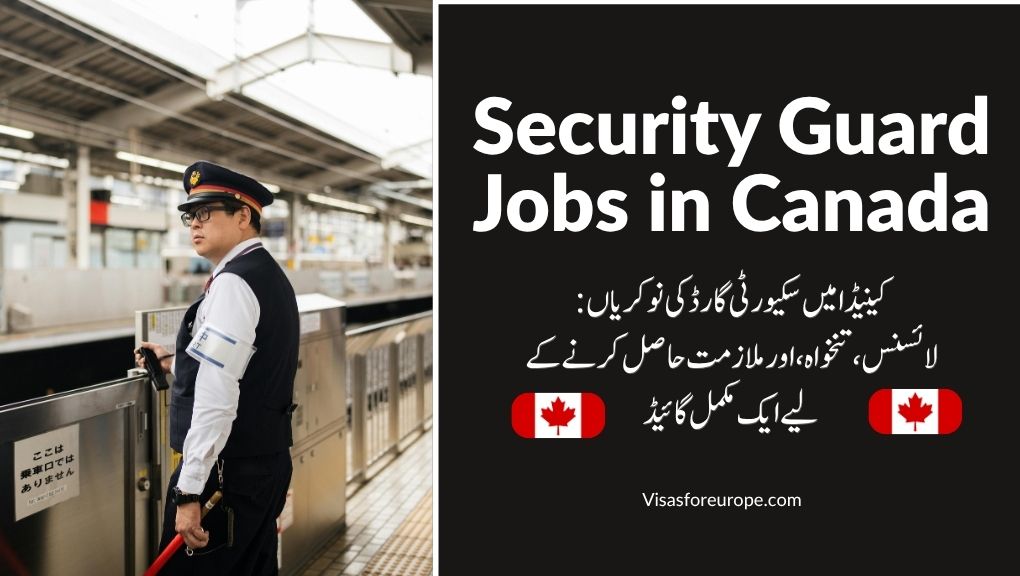
Walk into a shopping mall, hospital, university campus, construction site, or condo lobby anywhere in Canada, and you will almost certainly see a security guard. These professionals are part of everyday life, and the demand for them keeps growing. That makes security guard jobs in Canada one of the more accessible entry points into the workforce, especially for newcomers, students, and career changers.
The good news is that you do not need a university degree to get started. The challenge is that the rules are not the same everywhere. Canada regulates private security at the provincial level, so the licence you need in Ontario is not identical to the one you need in British Columbia or Alberta.
This guide walks you through what the job involves, who can apply, how licensing works, what you can expect to earn, and how to get hired faster. Whether you are already in Canada or planning a move, you will leave with a clear roadmap.
What Does a Security Guard Do in Canada?
Many people picture a guard sitting at a desk watching a screen. In reality, the role is much broader. A security guard’s core job is to protect people, property, and information by deterring problems, spotting risks early, and responding appropriately when something goes wrong.
Typical daily duties include:
- Patrolling buildings, parking lots, and grounds on foot or by vehicle
- Monitoring CCTV cameras and alarm systems
- Controlling access by checking IDs, issuing visitor passes, and managing entry points
- Writing incident reports and keeping detailed daily logs
- Responding to alarms, emergencies, and suspicious activity
- Assisting the public with directions, lost property, and general questions
- Enforcing site rules politely but firmly
An important point: Canadian security guards are not police officers. They generally have no special legal powers beyond those of an ordinary citizen, apart from authority granted by property owners and the rules of their licence. Good guards observe, report, and de-escalate rather than act like law enforcement.
Types of Security Guard Jobs Available
One reason the field is attractive is its variety. You can choose a setting that matches your personality and comfort level.
Static (Site) Security Guards
These guards are posted at one location, such as a corporate office, residential building, or school. The work often involves front-desk duties, visitor management, and basic patrols.
Mobile Patrol Guards
Mobile guards drive between multiple sites, checking each one at set intervals. This suits people who dislike sitting in one place all shift and who hold a valid driver’s licence.
Retail and Loss Prevention Officers
Working in stores and malls, these guards watch for theft, support staff, and keep shoppers safe. Customer service skills matter a great deal here.
Healthcare Security
Hospitals and care facilities hire guards to manage access, handle upset visitors, and support medical staff. The environment can be demanding, so this role often calls for stronger de-escalation skills.
Event and Crowd Security
Concerts, sports games, festivals, and conferences all need crowd managers. Shifts are often irregular and evening-heavy, but the atmosphere is lively.
Construction Site Security
Building sites are vulnerable to theft and vandalism, particularly after hours. Guards here usually work overnight and monitor equipment and materials.
Corporate and Executive Protection
At the higher end, specialized roles involve protecting executives or sensitive corporate assets. These positions usually require more experience and additional training.
Armed vs. Unarmed Guards
The vast majority of security guard jobs in Canada are unarmed. Armed roles, such as armoured car services, are far less common, heavily regulated, and require additional firearms licensing and training. If you are new to the field, plan on starting unarmed.
Who Can Work as a Security Guard in Canada?
Requirements vary by province, but most places share these basic conditions:
- Minimum age of 18
- Legal eligibility to work in Canada (citizen, permanent resident, or valid work permit)
- A clean criminal record check, with certain offences disqualifying you
- Completion of mandatory provincial training
- A valid security guard licence from the provincial regulator
- Basic language ability in English or French, since you will write reports and communicate in emergencies
Some provinces also require first aid and CPR certification. Always confirm the current rules with your provincial regulator before paying for any course, because requirements can change.
Security Guard Licence Requirements by Province
Because regulation is provincial, here is a general overview of how it works in the largest job markets. Treat this as a starting point and verify details on the official government websites.
Ontario
Ontario has the largest number of security jobs. Candidates typically need to complete an approved basic security guard training course, pass a provincial exam, and complete a first aid and CPR course. After that, you apply for your licence through the provincial government. The licence is time-limited, so you will need to renew it. Licensing is handled through the Ministry of the Solicitor General.
British Columbia
BC requires a security worker licence issued by the Security Services Division. Applicants complete Basic Security Training (BST) through an approved provider, pass a criminal record screening, and apply for the licence. Renewal is required periodically.
Alberta
Alberta requires a security professional licence, which involves approved training, an exam, and a background check. The licence is issued through the provincial Solicitor General’s office.
Other Provinces
Quebec, Manitoba, Saskatchewan, Nova Scotia, and the rest each have their own agencies and training standards. If you plan to move between provinces, expect to complete the new province’s requirements rather than simply transferring your licence.
Tip: Only take training from providers approved by your provincial regulator. A certificate from an unapproved school will not qualify you for a licence.
How to Become a Security Guard in Canada: Step by Step
Here is a simple roadmap you can follow.
- Check your eligibility. Confirm your age, your legal right to work, and that you have no disqualifying criminal history.
- Research your province’s rules. Visit the official regulator’s website and read the current requirements.
- Enrol in approved training. Choose a reputable, government-approved training provider.
- Complete first aid and CPR if your province requires it. Even where it is optional, it makes your resume stronger.
- Pass the licensing exam. Study the course material, since the test covers legal powers, report writing, and emergency procedures.
- Apply for your licence. Submit your application, documents, and fees through the official channel.
- Build your resume. Highlight customer service, reliability, communication, and any relevant volunteer or work experience.
- Apply to employers. Contact security companies, check job boards, and consider in-house security roles.
- Prepare for interviews. Expect scenario-based questions about handling conflict and emergencies.
- Keep learning. Additional certifications open doors to better pay and responsibility.
Security Guard Salary in Canada
Pay depends on your province, employer, experience, and the type of site. As a rough guide, entry-level guards often earn somewhere in the range of $17 to $22 per hour, while experienced guards, supervisors, and specialized roles can earn noticeably more. These figures are approximate and change over time with minimum wage updates and local demand, so check Canada’s Job Bank for current wage data in your area.
Factors that influence your pay:
- Location: Large cities and high-cost regions generally pay more.
- Shift type: Overnight and weekend shifts sometimes carry premiums.
- Site risk: Hospitals, government facilities, and high-risk locations tend to pay better than basic residential posts.
- Seniority: Supervisors, site managers, and trainers earn more.
- Specialized skills: Bilingual ability (English and French), CCTV expertise, and advanced first aid can raise your value.
- Overtime: Many guards boost their income through extra shifts.
Benefits vary widely. Some larger employers offer health coverage, paid training, and retirement plans, while smaller contractors may offer fewer extras. Ask about benefits during interviews.
Skills That Help You Get Hired
Employers value personal qualities as much as paperwork. The most in-demand skills include:
- Strong communication: You will speak with all kinds of people, often in stressful moments.
- Observation and attention to detail: Noticing small changes can prevent big problems.
- Calm under pressure: Staying composed protects everyone around you.
- Report writing: Clear, accurate, factual reports matter, especially if an incident goes to court.
- Reliability and punctuality: Missing a shift can leave a site unprotected.
- Basic tech comfort: Many sites use digital logs, access-control software, and camera systems.
- Physical fitness: Some roles involve long periods of standing or walking.
- Professional appearance and attitude: You represent both your employer and the client.
Where to Find Security Guard Jobs in Canada
You have several options, and using more than one will speed up your search.
- Government Job Bank: A trusted source for current listings and wage information.
- Major online job boards: Search terms such as “security officer,” “security guard,” and “loss prevention.”
- Security companies directly: Large national firms and smaller local agencies regularly hire. Check their careers pages.
- In-house employers: Hospitals, universities, malls, hotels, and corporations may hire their own security staff.
- Staffing agencies: These can place you quickly, sometimes with flexible shifts.
- Training schools: Many approved providers have employer connections and job placement support.
- Networking: Tell friends, classmates, and community groups you are looking. Referrals carry weight.
Beware of scams. Never pay a “recruiter” for a guaranteed job offer, and be cautious about anyone promising a licence without proper training. Legitimate employers do not charge you to hire you.
Security Guard Jobs for Newcomers and International Applicants
Many people look into this career because it is relatively easy to enter. If you are moving to Canada, here are a few things to understand.
- Work authorization comes first. You need legal permission to work, whether through permanent residency, a work permit, or another valid status. A security employer cannot hire you without it.
- International students may be able to work part-time during their studies, subject to the conditions of their study permit. Confirm the current rules with Immigration, Refugees and Citizenship Canada (IRCC).
- Foreign experience may not transfer. Previous security or military work abroad can strengthen your resume, but you will still usually need Canadian training and a provincial licence.
- Language matters. Better English or French skills give you more options and higher pay.
- Security work is not a shortcut to immigration. Treat it as a stepping stone for gaining Canadian work experience, not as a guaranteed pathway to status.
Always rely on official government sources for immigration questions, since rules change.
Career Growth: Where Can Security Work Lead?
A security guard job does not have to be a dead end. With experience and extra training, many people move up into:
- Site supervisor or team lead
- Security manager or operations manager
- Loss prevention specialist
- Corporate security or risk management
- Control room or CCTV operator
- Training instructor
- Investigations or compliance roles
- Public sector paths, such as transit enforcement, border services, or correctional work (these have their own separate hiring requirements)
Taking supervisor courses, learning advanced emergency response, and building a record of reliability will help you move forward.
Pros and Cons of a Security Guard Career
No job is perfect, so here is an honest look.
Advantages:
- Low barrier to entry compared with many careers
- Steady demand across the country
- Flexible shift options, including part-time work
- Opportunities for advancement
- Quiet shifts at some sites allow time to study or plan
Challenges:
- Entry-level pay can be modest
- Night, weekend, and holiday shifts are common
- Some sites involve confrontation or stress
- Long hours on your feet or alone
- Weather exposure at outdoor posts
Weigh these against your own goals, and consider starting in a setting that matches your comfort level.
Tips to Stand Out in Interviews
- Dress neatly and arrive early.
- Practice scenarios. Be ready to explain what you would do if someone refused to leave, if an alarm went off, or if you saw a theft.
- Emphasize de-escalation over force.
- Show you understand your limits as a guard, including the legal boundaries of your role.
- Highlight reliability. Employers worry about no-shows more than almost anything else.
- Ask good questions about training, supervision, and scheduling.
Conclusion
Security guard jobs in Canada offer a realistic, accessible way to build a stable career, whether you are a newcomer, a student, or someone looking for a fresh start. The path is straightforward: confirm your eligibility, complete approved training, earn your provincial licence, and apply to employers who value professionalism and dependability. With experience and extra certifications, you can grow well beyond an entry-level post.
Start by visiting your provincial regulator’s website, because the rules and training providers are different in each region. A little preparation upfront will save you time, money, and frustration later.
Frequently Asked Questions (FAQ)
Do I need a licence to work as a security guard in Canada?
Yes. In nearly all provinces, you must hold a valid security guard licence before working, and you generally need to complete approved training first.
How long does it take to get licensed?
Timelines vary. Training can take a few days to a couple of weeks, but processing times for background checks and licence issuance can add more. Check your provincial regulator for current estimates.
Can I work as a security guard on a study permit?
Possibly, depending on the conditions of your permit and your hours. Confirm the latest rules with IRCC before accepting any job.
Is it hard to get hired as a security guard?
Entry-level positions are generally easier to find than in many other fields, but strong candidates still need a licence, reliable availability, and good communication skills.
Do security guards carry weapons in Canada?
Most do not. The majority of jobs are unarmed, and armed roles require extra licences and training.
What is the average pay for a security guard?
Entry-level wages are often in the high teens to low twenties per hour, with higher pay for experienced or specialized roles. Check Job Bank for up-to-date figures in your region.
Can I transfer my licence between provinces?
Usually not automatically. You will typically need to meet the new province’s licensing requirements.
Is a security guard job good for beginners?
Yes. It is one of the more beginner-friendly careers, with on-the-job learning and room to advance.